Short Story · Allegory

The Mark of the Deliverer

A village prayed for a deliverer. What came was not power — it was potential. And a question only they could answer.

David Adesina · 10 min read

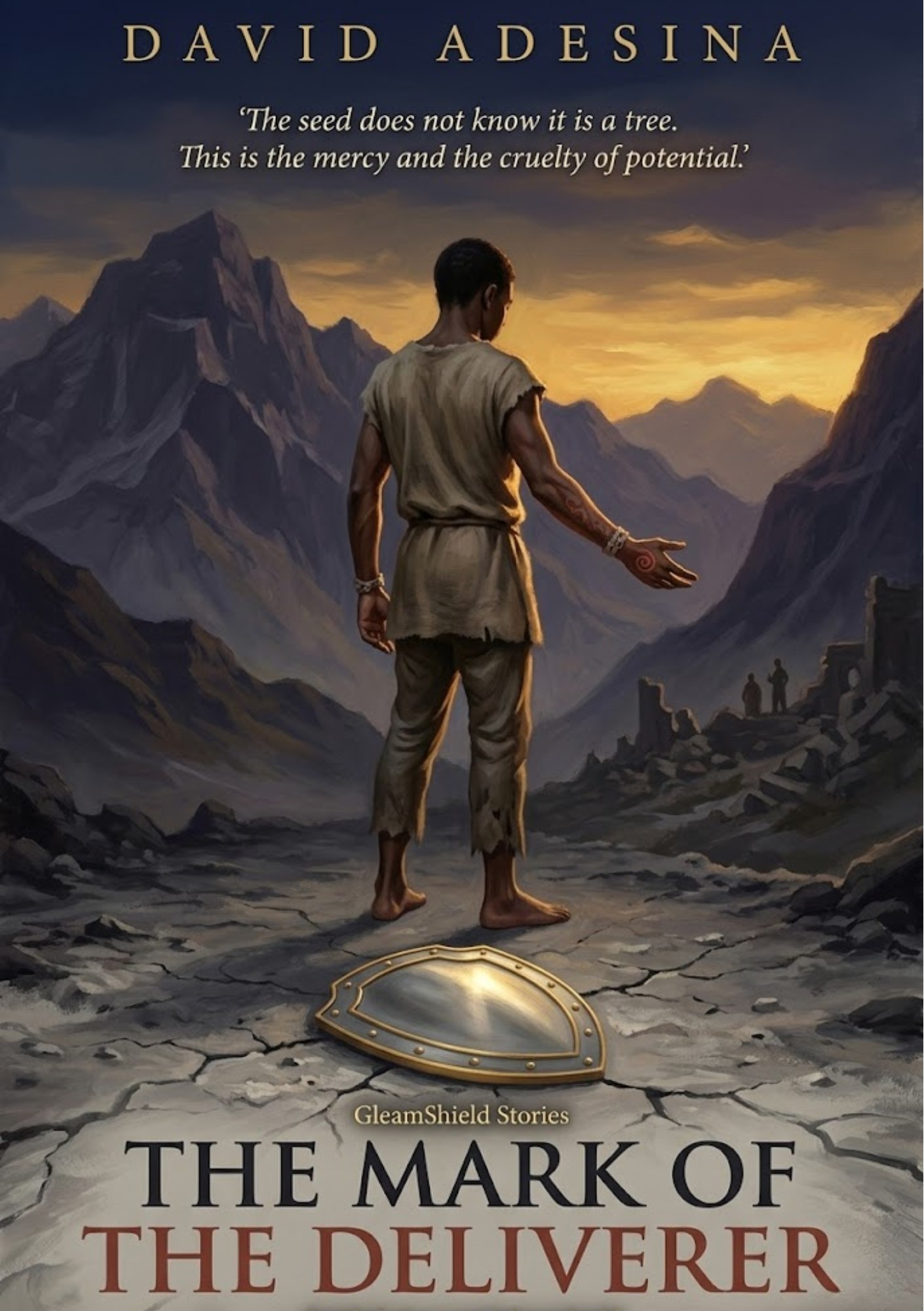
A lone figure stands in a shadowed mountain valley, a glowing spiral mark on his palm

There are places where hope does not die.

It starves.

Beneath the shadow of the Black Mountains lay a village that had long forgotten what it meant to expect anything good. Their fields no longer argued with the seasons — they simply refused to grow. Their houses leaned like tired men. Their laughter had become a language no one remembered how to speak.

They still prayed.

But not with faith.

They prayed the way drowning men move their arms — out of instinct, not belief. Day after day, year after year, their voices rose thin and desperate, until even their cries lost shape and became part of the wind that passed through the valley.

And still — nothing.

Until one night, something answered.


Elder Olam had long outlived his strength, but not his stubbornness. While others slept or surrendered to quiet despair, he climbed the same lonely rock he always had, as though height could force heaven to listen.

That night felt different. Not louder. Not brighter. Just… still. Even the wind seemed to hold its breath.

Olam lifted his eyes — not with hope, but with habit.

"Are You still listening," he whispered, "or have we been speaking to silence?"

For a moment, nothing moved.

Then a voice came — not from above, not from below, but from everywhere at once. Deep. Steady. Unavoidable. The kind of voice that does not ask to be believed.

It simply is.

"The one you seek is not coming."

"He is already here."

The words did not comfort him. They unsettled him.

"Marked upon his right palm," the voice continued, "a crimson spiral — like the turning of time."

And just as suddenly as it came — it was gone.

Olam fell to his knees, not in reverence, but in shock. His body trembled as though it had been holding something too large to contain. Then, slowly, something broke across his face.

Not fear. Not confusion.

Joy.

Wild, unrestrained, almost foolish joy.

"He's here," he whispered. Then louder — "He's already here!"


By morning, the village was no longer quiet. Olam's voice tore through the square, dragging people from their homes, from their doubts, from whatever fragments of sleep they had managed to gather.

"Good news!" he shouted, breathless, eyes burning with something they had not seen in years. "We have been heard!"

They gathered — hesitant at first, then desperate.

"What did He say?" someone asked.

Olam grinned. The kind of grin that makes people uncomfortable.

"The Deliverer lives," he said.

A ripple passed through the crowd.

"When will he come?" another voice asked, trembling with fragile hope.

Olam shook his head. "He won't."

Silence.

"Because he never left."


Hope, when starved long enough, does not return gently. It erupts.

The village dissolved into motion. People ran, called out, grabbed one another's hands, turning palms upward as though the answer might be hiding in plain sight. Children laughed as they turned it into a game. Old women argued over forgotten prophecies. A man insisted he had seen the mark on a stranger who had already left. Someone, in a moment of complete certainty, tried to examine a goat.

Desperation does not sharpen vision. It distorts it.

They were not looking for truth anymore. They were looking for relief.


It took days before the whispers began. Not loud. Not certain. Just enough to pull attention toward the edges of the village — toward a place most had learned to ignore.

The Outskirts. Where the forgotten lived. Where the broken were kept out of sight.

That was where they found him.


Nari was not what they expected.

He was thin in the way hunger carves a person down to their bones. His skin carried the quiet record of suffering. Chains rested on him as though they had always belonged there.

He did not look like a deliverer. He looked like someone waiting to be buried.

One of the villagers reached for his hand, almost unwillingly, as though afraid of what it might confirm. They turned his palm upward.

And there it was.

Faint, but undeniable. A crimson spiral.

The air shifted.

"It's him," someone whispered. But the words did not carry wonder. They carried doubt.

"This… is the answer?" another asked.

Even Olam said nothing. Because for the first time since the voice spoke — he did not understand.


That night, Olam returned to the rock. But this time he did not come with quiet questions. He came with anger.

"We begged for deliverance!" he shouted into the silence. "We cried until our voices disappeared!"

His hands trembled. "And You give us a broken boy?"

The stillness returned. Then the voice. Unmoved. Unoffended.

"You asked for power. I gave you potential."

"You asked for freedom. I gave you responsibility."

The words settled heavier than before.

"Will you raise him," the voice asked, "or bury what I sent?"


The answer did not come easily.

Some wanted to leave Nari where they found him, convinced this was either a mistake or a cruel misunderstanding. Others, quieter but firmer, insisted that if this was truly what they had been given, then abandoning him would be no different than abandoning hope itself.

In the end, they chose. Not because they were certain. But because they had run out of alternatives.

They went back for him.


Freedom did not arrive with glory. It came clumsy, afraid, and imperfect.

The rescue was messy — plans forgotten, mistakes made, moments where everything nearly collapsed. But desperation, when it finally finds direction, can become something close to courage.

They broke his chains. Barely. And carried him home.


Nari did not thank them. He did not see what they saw. He only saw the same truth he had always known.

"I can't even save myself," he said one night, his voice thin but steady. "And you think I can save you?"

No one answered immediately. Because, for a moment — they believed him.


What followed was not transformation. It was struggle.

Nari failed more than he succeeded. He stumbled through training, doubted every step, and carried a quiet resentment toward the weight they had placed on him. The villagers, too, began to fracture under the pressure. Arguments rose. Faith wavered. Regret whispered louder each day.

At one point, Nari ran. Not far. Just far enough to prove that part of him would rather disappear than become something he did not believe in.

He stared at his palm that night. The spiral was faint. Almost gone.

"I didn't ask for this," he said to no one.

And for the first time — it felt true.


Olam found him. Not with anger. Not with disappointment. But with a kind of clarity that only comes when illusions finally die.

"You think this was given to you because you're ready?" he asked.

Nari said nothing.

"No one ever is."

"Then why me?" Nari asked, his voice breaking in a way he could no longer hide.

Olam held his gaze.

"Because you didn't believe you could. And that is exactly who must."


The final confrontation did not begin with strength. It began with hesitation.

When the moment came — when everything they had hoped for stood directly in front of them — Nari almost stepped back. Almost.

The people watched him. Not with confidence. But with fragile, trembling expectation.

Nari looked at his hand. The spiral burned. Not brightly. But steadily.

And for the first time, he did not see it as a mark of destiny. He saw it as a choice.

He stepped forward.

"You waited for someone to save you," he said, his voice low but carrying.

The wind shifted.

"But you were never meant to stay weak."

What followed was not magic. It was awakening. Chains broke — not just the ones made of iron, but the ones they had worn inside themselves for years. And for the first time, they fought back.


When it was over, the valley felt unfamiliar. Not because it had changed, but because they had.

Laughter returned, awkward at first, then natural. Life moved again, slowly reclaiming what had been abandoned.

Olam watched it all from a distance. Quiet. Satisfied.

"The seed…" he murmured.

And then, with a faint smile —

"…became a tree."


Deliverance did not come the way they expected.
It did not arrive complete, powerful, and undeniable.
It came weak. Unfinished. Easy to reject.

And it asked a question they could not ignore:

Would they build it — or bury it?

More From the Archives

Be the first to receive new stories, characters, and articles from the GleamShield universe.