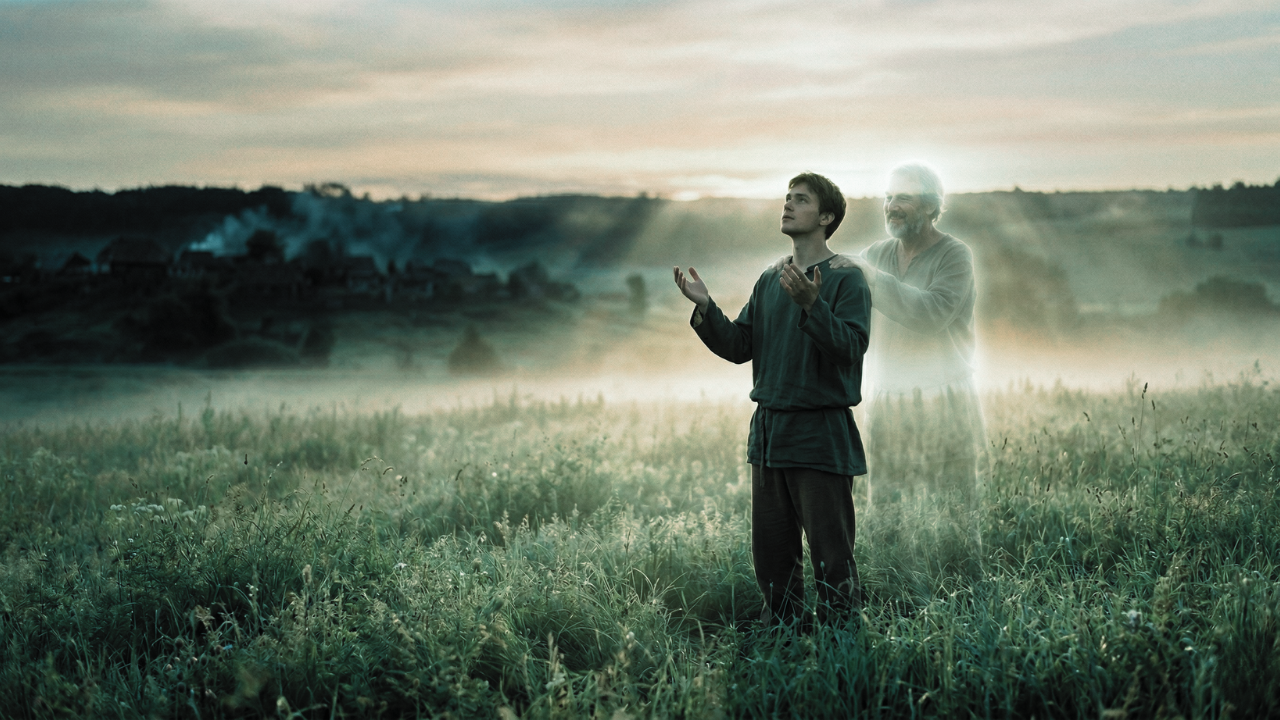
There was a man who lived with his only son on the edge of a quiet village.
Beyond the village lay a wide and beautiful field, planted with many kinds of crops. The soil was rich, the rains faithful, the seasons steady in their course. Every morning, the man went to the field. Some days he returned with grain. Some days with fruit. Some days with nothing in his hands.
Yet he always returned at peace.
The son never knew hunger. The barns were full. The jars never emptied.
Still, as the boy grew, a question grew with him:
Why does my father go to the field when we already have enough?
The father never explained. He simply went.
Years passed. The boy became a man. The father's strength faded. His steps slowed, but his devotion did not.
One evening, as the sun sank behind the hills, the father called his son and said, "My time in the field is nearly complete. It is time for you to go in my place."
The son hesitated. "Father," he said, "we lack nothing. The storehouses are heavy. Why must I go every day as you did?"
The father looked at him for a long moment and answered only, "You must go."
So the son went — but not as his father had.
He went when supplies were low. He went when need announced itself. When all was quiet, he stayed home.
And nothing seemed to change.
Until the night it did.
A cry tore through the village. Then another. Fire climbed the walls. Steel rang in the streets. Enemies had entered the land, and fear spread faster than word.
The son ran to his father, breathless. "Father! The enemy has come. The village is unraveling. People are dying!"
The father listened without haste.
When the son finished, the old man asked, "Have you been going to the field?"
The son stared at him in disbelief. "Why do you speak of a field," he said sharply, "when destruction walks our streets?"
The father asked again, calmly: "Have you been going to the field?"
Anger rose. "What does soil teach me about swords? What does grain do against enemies?"
The father stood slowly and said, "My son, you thought I went to the field to gather food. But I went to stand before God."
The son fell silent.
"In that field, I watched seed die and rise by a power I could not command. I learned patience from rain that came without my asking. I learned restraint from the sun that never scorched what it sustained."
"The field taught me who governs life when no one is afraid. I did not go for crops. I went to keep the ground before God."
"Keep it how?" the son whispered.
"As a priest," the father replied. "I blessed the land. I named order. I stood watch. I acknowledged the One who rules both seed and nation."
The father's voice grew heavier. "You gathered what I preserved. You ate what I guarded. But you did not keep the place where authority was maintained."
"That is why the enemy came," the father said quietly. "Not because the land was weak — but because the priesthood was neglected."
Silence settled between them.
"What must I do?" the son asked.
"Go to the field," the father said. "Not to harvest. But to stand where I stood."
At dawn, the son went.
The field was unchanged, yet something was missing — the weight his father once carried there. The earth felt as though it waited.
And there, in the stillness, the God of the field spoke — not in thunder, but in truth.
"You have inherited provision, but you abandoned priesthood. You received fruit, but you did not guard the altar."
"The enemy crossed your borders because the place of intercession stood empty."
"What must I say?" the son asked.
"Say what was spoken before you," the voice replied. "Stand as one appointed. Name what is good. Bless what I have given. Guard what I sustain."
The son rose. He lifted his hands — not as a farmer, but as a son who now understood his inheritance.
He spoke blessing where silence had ruled. He restored order where neglect had lingered.
And as the priesthood returned, the land responded. Fear loosened its grip. Unrest lost its voice. The enemy found no footing where authority stood again.
Then the son understood at last:
The field was never about crops.
It was about communion.
And peace did not leave because God withdrew —
but because the one meant to stand before Him
stopped coming.