Key Takeaways
- The claim that the Quran has been preserved “dot for dot” since Muhammad doesn’t survive contact with the Hadith literature itself — companions’ codices genuinely differed, and Uthman ordered the other copies burned.
- Hadiths in Sahih Muslim, Sunan Ibn Majah, and Abu Ubaid’s Kitab Fada’il al-Quran record specific verses, and even a much longer version of Surah al-Ahzab, that are no longer found in the standard text.
- The Uthmanic text was purely consonantal — no vowel marks or dots — which is why multiple qira’at (readings) arose, later narrowed to seven, then ten, by Ibn Mujahid in 322 AH.
- The Hafs ‘an ‘Asim reading almost every Muslim reads today was standardized in 1924 (Cairo) and mass-distributed from 1985 onward (King Fahd Complex) — its named transmitters were born decades after Muhammad’s death.
- If the gap between Jesus and the New Testament writings is used to distrust the Bible, the same standard applied consistently would undermine confidence in the Quran’s transmission too.
The Claim
When I talk to muslims about the love of God, and I ask them oh why are you a muslims. And majority of them would bring up the Quran and say “that it has been preserved word for word, dot for dot since the time of the prophet Mohammad and there has not been a slight changed unlike the Bible, which has been recopied and changed over time”
Now of course the claim about the Bible being corrupted is not true and we talked about the compilation of the old testament and why different christian sets contains different numbers of books.
However in this blog we will focus on whether the Quran has actually being preserved letter for letter, dot for dot since the time of the prophet Mohammad. And we will do this by just seeing a series of verses in the Hadith and in the Quran, then go over to the historical background of the Quran and later on manuscript evidences.
First of all we know that Sarah 15:9 says; It is certainly We Who have revealed the Reminder, and it is certainly We Who will preserve it.
Many Muslims will say that the reminder means the Quran, that is not entirely true because in Surah 16:43
- وَمَآ (Wa-ma): And not
- أَرْسَلْنَا (arsalna): We sent
- مِن (min): from / of
- قَبْلِكَ (qablika): before you
- إِلَّا (illa): except
- رِجَالًۭا (rijalan): men
- نُّوحِىٓ (nuhi): We reveal / We sent inspiration
- إِلَيْهِمْ (ilayhim): to them
- فَاسْـَٔلُوٓا۟ (fas-alu): so ask / inquire
- أَهْلَ (ahla): the people
- الذِّكْرِ (al-dhikri): of the Reminder / of the Message / of knowledge
- إِن (in): if
- كُنتُمْ (kuntum): you are
- لَا (la): not
- تَعْلَمُونَ (ta'lamun): know
So the reminder does not refer to the Quran alone but it basically refers to Allah’s words.
and that is why people who believe that the Quran has been preserved but the Torah and the injil has been changed makes no sense at all, since they are all Allah’s words.
But anyways, since in this context the Quran is also considered to be Allah’s words, then it is claimed that it would be preserved by Allah and that’s what both earlier and present Muslims believe. and that is why muslims reciters could be sent to battle, because Allah preserves his words.
How the Quran Was First Compiled
Narrated Zaid bin Thabit:
Abu Bakr As-Siddiq sent for me when the people of Yamama had been killed (i.e., a number of the Prophet's Companions who fought against Musailima). (I went to him) and found `Umar bin Al- Khattab sitting with him. Abu Bakr then said (to me), “`Umar has come to me and said: “Casualties were heavy among the Qurra' of the Qur'an (i.e. those who knew the Qur'an by heart) on the day of the Battle of Yamama, and I am afraid that more heavy casualties may take place among the Qurra' on other battlefields, whereby a large part of the Qur'an may be lost. Therefore I suggest, you (Abu Bakr) order that the Qur'an be collected.” I said to `Umar, “How can you do something which Allah's Apostle did not do?” `Umar said, “By Allah, that is a good project.” `Umar kept on urging me to accept his proposal till Allah opened my chest for it and I began to realize the good in the idea which `Umar had realized.” Then Abu Bakr said (to me). 'You are a wise young man and we do not have any suspicion about you, and you used to write the Divine Inspiration for Allah's Messenger (ﷺ). So you should search for (the fragmentary scripts of) the Qur'an and collect it in one book.” By Allah If they had ordered me to shift one of the mountains, it would not have been heavier for me than this ordering me to collect the Qur'an. Then I said to Abu Bakr, “How will you do something which Allah's Messenger (ﷺ) did not do?” Abu Bakr replied, “By Allah, it is a good project.” Abu Bakr kept on urging me to accept his idea until Allah opened my chest for what He had opened the chests of Abu Bakr and `Umar. So I started looking for the Qur'an and collecting it from (what was written on) palme stalks, thin white stones and also from the men who knew it by heart, till I found the last Verse of Surat at-Tauba (Repentance) with Abi Khuzaima Al-Ansari, and I did not find it with anybody other than him. The Verse is: 'Verily there has come unto you an Apostle (Muhammad) from amongst yourselves. It grieves him that you should receive any injury or difficulty..(till the end of Surat-Baraa' (at-Tauba) (9.128-129). Then the complete manuscripts (copy) of the Qur'an remained with Abu Bakr till he died, then with `Umar till the end of his life, and then with Hafsa, the daughter of `Umar.
Now from this Hadith, it shows that at least some pars of the Quran was lost as we would also see in others Hadiths later on. However a very striking thing happened here, in that we see that back then there was no one person that actually memorized the Quran in its entirety from beginning to the end, because here Zaid ibn Thabit said he found the verse of repentance with only one person who was Abi Khuzaima Al-Ansari, and he didn’t find it with any other person.
And we see the same thing in sahih al- Bukhari 4989:
Narrated Zaid bin Thabit:
Abu Bakr sent for me and said, “You used to write the Divine Revelations for Allah's Messenger (ﷺ) : So you should search for (the Qur'an and collect) it.” I started searching for the Qur'an till I found the last two Verses of Surat at-Tauba with Abi Khuza`ima Al-Ansari and I could not find these Verses with anybody other than him. (They were): 'Verily there has come unto you an Apostle (Muhammad) from amongst yourselves. It grieves him that you should receive any injury or difficulty ...' (9.128-129).
Also in sahih al-Bukhari 4988:
Zaid bin Thabit added, “A verse from Surat Ahzab was missed by me when we copied the Qur'an and I used to hear Allah's Messenger (ﷺ) reciting it. So we searched for it and found it with Khuza`ima bin Thabit Al-Ansari. (That Verse was): 'Among the Believers are men who have been true in their covenant with Allah.' (33.23).
Uthman’s Standardization and the Burned Copies
Anyways back to our line of thought, we see that under Abu Bakr, the Quran was compiled but then there arose a dialect problem.
Sahih al-Bukhari 4987: Narrated Anas bin Malik:
Hudhaifa bin Al-Yaman came to `Uthman at the time when the people of Sham and the people of Iraq were Waging war to conquer Arminya and Adharbijan. Hudhaifa was afraid of their (the people of Sham and Iraq) differences in the recitation of the Qur'an, so he said to `Uthman, “O chief of the Believers! Save this nation before they differ about the Book (Qur'an) as Jews and the Christians did before.” So `Uthman sent a message to Hafsa saying, “Send us the manuscripts of the Qur'an so that we may compile the Qur'anic materials in perfect copies and return the manuscripts to you.” Hafsa sent it to `Uthman. `Uthman then ordered Zaid bin Thabit, `Abdullah bin AzZubair, Sa`id bin Al-As and `AbdurRahman bin Harith bin Hisham to rewrite the manuscripts in perfect copies. `Uthman said to the three Quraishi men, “In case you disagree with Zaid bin Thabit on any point in the Qur'an, then write it in the dialect of Quraish, the Qur'an was revealed in their tongue.” They did so, and when they had written many copies, `Uthman returned the original manuscripts to Hafsa. `Uthman sent to every Muslim province one copy of what they had copied, and ordered that all the other Qur'anic materials, whether written in fragmentary manuscripts or whole copies, be burnt.
Now the problem I have with this is that, if this was just merely differences in recitation then when uthman sent for the Quran which had been compiled during Abu Bakr,is he not just supposed to be like for example “guys the word is HUR not HER”, how come there were other copies of the Quran that had to be burnt, if it was just a dialect problem.
And for it be burnt meaning those other quranic manuscripts were slightly or more different than the one that was being standardized.
And this is not just a guess because we also know, in that in sahih al-Bukhari 4999:
Narrated Masriq:
`Abdullah bin `Amr mentioned `Abdullah bin Masud and said, “I shall ever love that man, for I heard the Prophet (ﷺ) saying, 'Take (learn) the Qur'an from four: `Abdullah bin Masud, Salim, Mu`adh and Ubai bin Ka`b.'
The prophet mohammed said learn from these people, and from bin masud codex we see he had omitted the Suratul-Fatihah, the opening surah, and the mu'awwithatayni, the two short surahs with which the Qur'an ends (Surahs 113 and 114).
However Ubai bin Ka’b believed it should be included.
Narrated Zirr bin Hubaish:
I asked Ubai bin Ka`b, “O Abu AlMundhir! Your brother, Ibn Mas`ud said so-and-so (i.e., the two Mu'awwidh-at do not belong to the Qur'an).” Ubai said, “I asked Allah's Messenger (ﷺ) about them, and he said, 'They have been revealed to me, and I have recited them (as a part of the Qur'an),” So Ubai added, “So we say as Allah's Messenger (ﷺ) has said.”
The possibility that Ibn Mas'ud may have denied that these three surahs were a part of the Qur'an vexed early Muslim historians. The well-known Iranian philosopher and historian Fakhruddin ar-Razi, who wrote a commentary on the Qur'an titled Mafatih al-Ghayb (“The Keys of the Unseen”) and who lived in the sixth century of Islam (1149-1209 AD) gave some attention to this problem and sought to prove that the allegations were unfounded.
- Imam Fakhruddin said that the reports in some of the ancient books that Ibn Mas'ud denied that Suratul-Fatiha and the Mu'awwithatayni are part of the Qur'an are embarrassing in their implications... But the Qadi Abu Bakr said “It is not soundly reported from him that they are not part of the Qur'an and there is no record of such a statement from him. He omitted them from his manuscript as he did not approve of their being written. This does not mean he denied they were part of the Qur'an. In his view the Sunnah was that nothing should be inscribed in the text (mushaf) unless so commanded by the Prophet (saw) ... and he had not heard that it had been so commanded”. (as-Suyuti, Al-Itqan fii Ulum al-Qur'an, p.186).
Another Muslim historian, an-Nawawi, in his commentary on the Muhaththab said that the Fatihah and the two “charm” surahs were unanimously regarded by the Muslims as part of the Qur'an and that what had been said about Ibn Mas'ud was false and unjustified (as-Suyuti, Al-Itqan, p.187). The famous dogmatic Muslim scholar Ibn Hazm likewise rejected the suggestion that Ibn Mas'ud had omitted these surahs from his codex:
- Ibn Hazm said in the Muhalla, “This is a lie attributed to Ibn Mas'ud. Only the reading of Asim from Zirr is authentic and in that are both the Fatiha and Mu'awwithatayni”. (as-Suyuti, Al-Itqan fii Ulum al-Qur'an, p.187).
The record goes on to say that Ibn Hajar al-Asqalani however, in his commentary on the Sahih of al-Bukhari (his famous Fath al-Baari), accepted these reports as sound, quoting authorities who stated that Ibn Mas'ud would not include the two “charm” surahs in his manuscript as Muhammad had, to his knowledge, only commanded that they be used as incantations against evil forces. He regarded the isnad (the chain of transmitters) for this record as totally sound and attempted to harmonise the conflicting records instead, suggesting that Ibn Mas'ud accepted the Fatiha and “charm” surahs as genuinely revealed but was reluctant to inscribe them in his written text.
When Uthman ordered other quranic manuscripts to be destroyed and as Ibn Mas'ud was eventually compelled to hand his over for elimination, it cannot be determined whether the three relevant surahs were actually included in his codex or not. If they were omitted, the reason is either that he was unaware that Muhammad had expressly stated that they were part of the Qur'an text (as alleged by Ubayy) or, less probably, that Ibn Mas'ud had actually determined that they were not part of the actual kitabullah, the Book of Allah, and that the other companions had assumed they were because they had come to Muhammad in the same form as the other surahs of the Qur'an.
The Variant Readings Between the Companions’ Codices
When we come to the rest of the Qur'an, however, we find that there were numerous differences of reading between the texts of Zaid and Ibn Mas'ud. As mentioned already the records in Ibn Abi Dawud's Kitab al-Masahif fill up no less than nineteen pages and, from all the sources available, one can trace no less than 101 variants in the Suratul-Baqarah alone. We shall mention just a few of the differences here in illustration of the nature of the variations between the texts.
1. Surah 2.275 begins with the words Allathiina yaakuluunar-ribaa laa yaquumuuna - “those who devour usury will not stand”. Ibn Mas'ud's text had the same introduction but after the last word there was added the expression yawmal qiyaamati, that is, they would not be able to stand on the “Day of Resurrection”. The variant is mentioned in Abu Ubaid's Kitab Fadhail al-Qur'an (cf. Nöldeke, Geschichte, 3.63; Jeffery, Materials, p.31). The variant was also recorded in the codex of Talha ibn Musarrif, a secondary codex dependent on Ibn Mas'ud's text, Taiha likewise being based at Kufa in Iraq where Ibn Mas'ud was based as governor and where his codex was widely followed (Jeffery, p.343).
2. Surah 5.91, in the standard text, contains the exhortation fasiyaamu thalaathati ayyaamin' - “fast for three days”. Ibn Mas'ud's text had, after the last word, the adjective mutataabi'aatin, meaning three “successive” days. The variant derives from at-Tabari (7.19.11 - cf. Nöldeke, 3.66; Jeffery, p.40) and was also mentioned by Abu Ubaid. This variant reading was, significantly, found in Ubayy ibn Ka'b's text as well (Jeffery, p.129) and in the texts of Ibn Abbas (p.199) and Ibn Mas'ud's pupil Ar-Rabi ibn Khuthaim (p.289).
3. Surah 6.153 begins Wa anna haathaa siraatii - “Verily this is my path”. Ibn Mas'ud's text read Wa haathaa siraatu rabbakum - “This is the path of Your Lord”. The variant derives again from at-Tabari (8.60.16 - cf. Nöldeke 3.66; Jeffery, p.42). Ubayy ibn Ka'b had the same reading, except that for rabbakum his text read rabbika (Jeffery, p.131). The secondary codex of Al-A'mash, mentioned by Ibn Abi Dawud in his Kitab al-Masahif (p.91), also began with the variant wa haathaa as in the texts of Ibn Mds'ud and Ubayy ibn Ka'b (Jeffery, p.318). Ibn Abi Dawud also adds a further variant, suggesting that Ibn Mas'ud read the word siraat with the Arabic letter sin rather than the standard sad (Kitab al-Masahif, p.61).
4. Surah 33.6 contains the following statement about the relationship between Muhammad's wives and the believers: wa azwaajuhuu ummahaatuhuu - “and his wives are their mothers”. Ibn-Mas'ud's text added the words wa huwa abuu laahum - “and he is their father”. The variant was also recorded by at-Tabari (21.70.8 - cf. Nöldeke 3.71; Jeffery p.75). This variant was likewise recorded in the codices of Ubayy ibn Ka'b (Jeffery, p.156) as well as those of Ibn Abbas (p.204), Ikrima (p.273) and Mujahid ibn Jabr (p.282), except that in these three cases the statement that Muhammad is the father of the believers precedes that which makes his wives their mothers. In the codex of Ar-Rabi ibn Khuthaim, however, where the variant also occurs, it is placed in the same position in the text as in the codices of Ibn Mas'ud and Ubayy (p.298). The considerable number of references for this variant reading argue strongly for its possible authenticity over and against its omission in the codex of Zaid ibn Thabit.
These four examples are of texts where the variant consisted of the inclusion of extra words or clauses not found in Zaid's codex and, in each case, the variant is supported by inclusion in other codices, notably those included in Ubayy's text. The majority of variants, however, relate to consonantal variants in individual words or different forms of these words. In some cases whole words were omitted, such as in Surah 112.1 where Ibn Mas'ud omitted the word qul - “say” as did Ubayy ibn Ka'b (Fihrist S.26 Z.26 - cf. Nöldeke 3.77; Jeffery, pp. 113 and 180).
In other cases the variant related to the form of a word which also slightly altered its meaning, as in Surah 3.127 where Ibn Mas'ud and Ubayy both read wa saabiquu (“be ahead”) for wa saari'uu (“be quick”) in the standard text (cf. Nöldeke, 3.64; Jeffery, pp. 34 and 125).
In yet other cases one single word might be added not affecting the sense of the text, as in Surah 6.16 where once again both Ibn Mas'ud and Ubayy recorded the same variant, namely yusrifillaahu - “averted by Allah” - for the standard yusraf - “averted” (recorded from Maki's Kitab al-Kasf, cf. Nöldeke, 3.66; Jeffery, pp. 40 and 129).
Also in sahih al - Bukhari 4944: Narrated Ibrahim:
The companions of `Abdullah (bin Mas`ud) came to Abu Darda', (and before they arrived at his home), he looked for them and found them. Then he asked them,: 'Who among you can recite (Qur'an) as `Abdullah recites it?” They replied, “All of us.” He asked, “Who among you knows it by heart?” They pointed at 'Alqama. Then he asked Alqama. “How did you hear `Abdullah bin Mas`ud reciting Surat Al-Lail (The Night)?” Alqama recited: 'By the male and the female.' Abu Ad-Darda said, “I testify that I heard me Prophet reciting it likewise, but these people want me to recite it:-- 'And by Him Who created male and female.' but by Allah, I will not follow them.”
And the above are just few examples to show that it was not just merely differences in recitations (like dialect problems or pronunciation problems)
And from Ubai bin Ka’b, he is said to have 2 extra surahs in his codex. We are informed that, whereas Ibn Mas'ud omitted the two “charm” surahs from his codex, Ubayy included two extra surahs, al-Hafd (the Haste) and al-Khal' (the Separation) (as-Suyuti, Al-Itqan, p.152-153). The narrative continues by stating that Abu Ubaid said:
- “Written in the text of Ubayy ibn Ka'b were the Fatihal-kitab (the Opening Surah) and the Mu'awwi-thatayni (the Charm Surahs) and Allahumma innaa nasta'iinka (the opening words of Suratul-Khal' meaning 'O Allah, we seek your help') and Allahumma ayyaaka na'budu (the opening words of Suratul-Hafd meaning 'O Allah, we worship you')”. (as-Suyuti, Al-Itqan fii Ulum al-Qur'an, p.153).
For Ubayy, His order of Surahs, in some ways similar to Zaid's, was nonetheless different at many points (as-Suyuti, Al-Itqan fii Ulum al-Qur'an, p.150).
Some examples of instances where he agreed with Ibn Mas'ud and differed in turn from Zaid (there were in fact a very large number which could be mentioned) are the following:
1. For the standard reading wa yush-hidullaaha in Surah 2.204 he read wa yastash-hidullaaha (cf. Nöldeke 3.83; Jeffery, p.120).
2. He omitted the words in khiftum from Surah 4.101 (cf. Nöldeke 3.85; Jeffery, p.127).
3. He read mutathab-thibiina for muthabthabiina in Surah 4.143 (cf. Jeffery, p.127).
There are a number of cases where whole clauses differed in his text. In Surah 5.48, where the standard text reads wa katabnaa 'alayhim fiiha - “and We inscribed therein for them (the Jews)” - the reading of Ubayy ibn Ka'b was wa anzalallaahu alaa banii Isra'iila fiiha - “and Allah sent down therein to the Children of Israel” (cf. Nöldeke 3.85; Jeffery, p.128).
From Abu Ubaid we find that, whereas Surah 17.16 in the standard text reads amarnaa mutrafiihaa fafasaquu, Ubayy read this clause ba'athnaa akaabira mujri-miihaa fdmakaruu (cf. Nöldeke 3.88; Jeffery, p.140).
Also Sarah 33:6: the prophet is closer to the believers than their own selves, and his wives are their mothers.
Yusuf Ali comments:”in some qiraahs, like that of ubayy ibn na'b, occur also the words ‘and he is a father of them' which imply his spiritual relationship and connection with the words ‘and his wives are their mothers''.
And these are just to explain why they were other quranic materials that were ordered to be burnt, and it was not just a recitation problem that didn’t have consequence.
Portions Lost From the Quran
Because again, for there to be a recitation problem, there has to be short Vowels (Harakat) and dots, Which did not exist in the 7th century, and that is why the uthmanic quran was a consonantal one.
Anyways moving on from Uthman, after one quran had been standardized before I go on to the quran evidence showing that the quran has not been preserved perfectly dot to dot and word for word since the time of mohammed, I will like to show few other verses in the Hadiths that shows some portions of the quran has been lost.
Sahih muslim 1050: Abu Harb b. Abu al-Aswad reported on the authority of his father that Abu Musa al-Ash'ari sent for the reciters of Basra. They came to him and they were three hundred in number. They recited the Qur'an and he said:
You are the best among the inhabitants of Basra, for you are the reciters among them. So continue to recite it. (But bear in mind) that your reciting for a long time may not harden your hearts as were hardened the hearts of those before you. We used to recite a surah which resembled in length and severity to (Surah) Bara'at. I have, however, forgotten it with the exception of this which I remember out of it:” If there were two valleys full of riches, for the son of Adam, he would long for a third valley, and nothing would fill the stomach of the son of Adam but dust.” And we used so recite a surah which resembled one of the surahs of Musabbihat, and I have forgotten it, but remember (this much) out of it:” Oh people who believe, why do you say that which you do not practise” (lxi 2.) and” that is recorded in your necks as a witness (against you) and you would be asked about it on the Day of Resurrection” (xvii. 13).
Sahih muslim 1452a: 'A'isha (Allah be pleased with, her) reported that it had been revealed in the Holy Qur'an that ten clear sucklings make the marriage unlawful, then it was abrogated (and substituted) by five sucklings and Allah's Apostle (ﷺ) died and it was before that time (found) in the Holy Qur'an (and recited by the Muslims).
Here we see that the 10 sucklings were abrogated and substitutes for 5 during the time of the prophet which is not a problem(because for a verse to be abrogated it had to happen during the life time of the prophet, because he was the one getting the instructions and revelations of Allah) but then we see that the 5 sucklings which were read during the time of the prophet is no longer found in the quran, and it can’t be said to have been abrogated after mohammed died, because he was the one that received the revelations/instructions from Allah through angel jibril).
It was narrated that 'Aishah said:
“The Verse of stoning and of breastfeeding an adult ten times was revealed1, and the paper was with me under my pillow. When the Messenger of Allah died, we were preoccupied with his death, and a tame sheep came in and ate it.”
1: These verses were abrogated in recitation but not ruling. Other ahadith establish the number for fosterage to be 5
Abu Ubaid, Kitab Fada'il-al-Quran; Aisha….. said, Surat al-Ahzab (xxxiii) used two be recited in the time of the prophet with two hundred verse, but when Uthman wrote out the codices he was unable to procure more of it than there is in it today [I.e. 73 verses]
For this Hadith, it is deemed that it is weak in terms of its chain of transmission, but it is correct in terms of its jurisprudential meaning related to “abrogated of recitation”. However there are other authentic and extensive narrations confirming that Sarah Al-Ahzab was much longer than it is now.
The narration of Ubayy ibn Ka'b: He narrated it, imam Ahmad, An-Nasa'i and others narrated on the authority of Zirr ibn Hubaysh, who said: Ubayy Ibn Ka'b said to me: how many verses do you recite in Surat Al-Ahzab? Or how many do you count them in? I said: seventy three verses. He said: “Never! I have seen them, and they are equivalent to Sarah Al-Baqarah, or something longer than it.
Abu Ubaid, Kitab Fada'il al- Quran; [ibn Umar said]: “Let none of you say, ‘I have learned the whole quran, 'for how does he know what the whole of it is, when much of it has disappeared? Let him rather say, ‘I have learned what remains thereof.'”
——for this verse, I have heard that some scholars said that this very was referring to revelation from Allah and not the quran itself, but from what we have seen from the beginning of this blog, we see that it is most probably that it is the quran this Hadith was talking about, since it also clearly states it.
Al-Hajjaj’s Eleven Changes
During the caliphate of Abd al-Malik in the first century of Islam the governor of Iraq, al-Hajjaj ibn Yusuf, took steps to correct Uthman's text. He is said to have made eleven direct changes to the Qur'an text as it stood in its consonantal form, all of which are reflected in the Qur'an as it stands today.
Under the heading Baab: Ma Ghaira al-Hajjaaj fii Mushaf Uthman (“Chapter: What was Altered by al-Hajjaj in the Uthmanic Text”) Ibn Abi Dawud lists these specific amendments and his narrative setting them out begins as follows:
- Altogether al-Hajjaj ibn Yusuf made eleven modifications in the reading of the Uthmanic text. ... In al-Baqarah (Surah 2.259) it originally read Lam yatasanna waandhur, but it was altered to Lam yatasannah ... In al-Ma'ida (Surah 5.48) it read Shari ya'atan wa minhaajaan but it was altered to shir 'atawwa minhaajaan. (Ibn Abi Dawud, Kitab al-Masahif, p.117).
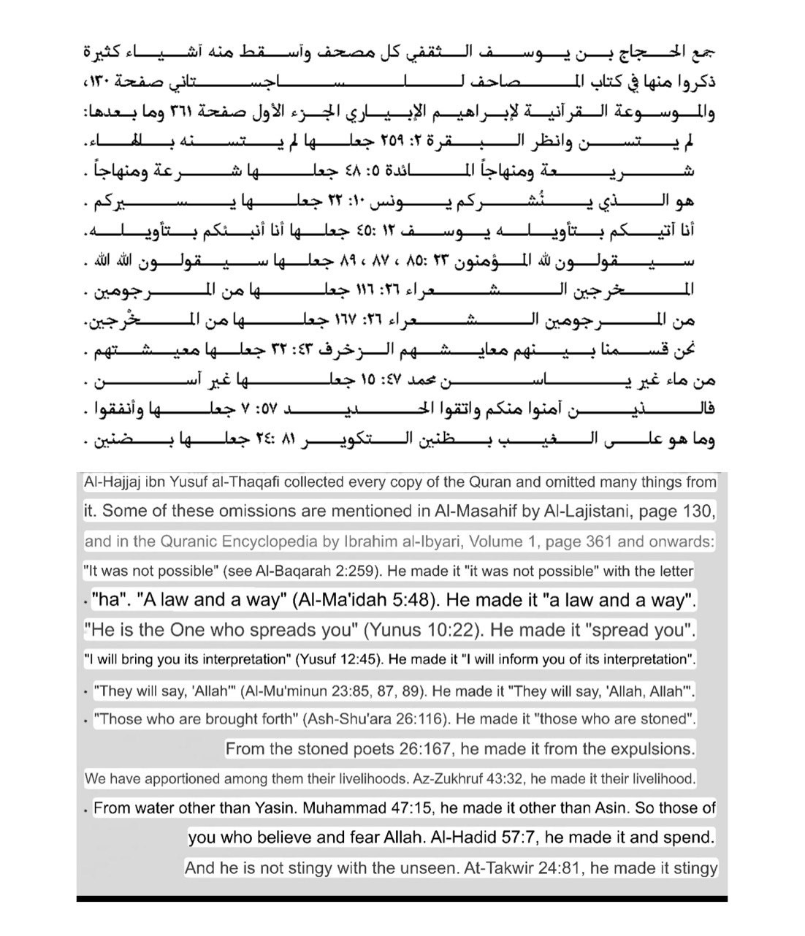
Now these on their own might not necessarily be problematic, but these are just to show that the claim of not even one letter of the Quran has been changed is not true.
Consonants, Dots, and the Rise of the Qira’at
Moving over from the Hadith, lets take a look at the Qurans historic evidence.
So as I already said, the Quran standardised by uthman was consonantal because ancient Arabic didn’t have short Vowels (Harakat)- which are small diacritical marks placed above or below consonants: Fatha, Kasra, Damma.
Now these are very important, because these dots and vowels can change the meaning of a word.
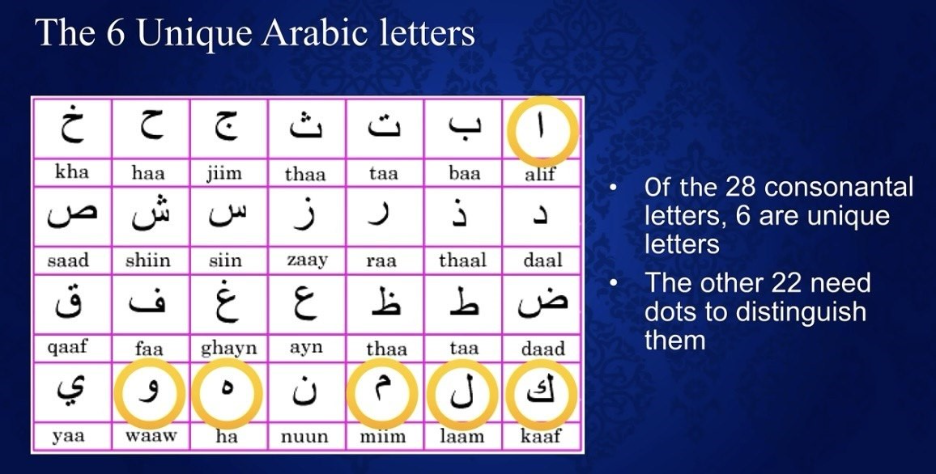
And that is why they are different qirā'āt (canonical Qur'anic readings).
Now these qirā'āt are different from the seven aḥruf (often translated as “seven modes” or “seven forms”)
Narrated `Umar bin Al-Khattab:
I heard Hisham bin Hakim reciting Surat Al-Furqan during the lifetime of Allah's Messenger (ﷺ) and I listened to his recitation and noticed that he recited in several different ways which Allah's Messenger (ﷺ) had not taught me. I was about to jump over him during his prayer, but I controlled my temper, and when he had completed his prayer, I put his upper garment around his neck and seized him by it and said, “Who taught you this Sura which I heard you reciting?” He replied, “Allah's Messenger (ﷺ) taught it to me.” I said, “You have told a lie, for Allah's Messenger (ﷺ) has taught it to me in a different way from yours.” So I dragged him to Allah's Messenger (ﷺ) and said (to Allah's Messenger (ﷺ)), “I heard this person reciting Surat Al-Furqan in a way which you haven't taught me!” On that Allah's Apostle said, “Release him, (O `Umar!) Recite, O Hisham!” Then he recited in the same way as I heard him reciting. Then Allah's Messenger (ﷺ) said, “It was revealed in this way,” and added, “Recite, O `Umar!” I recited it as he had taught me. Allah's Messenger (ﷺ) then said, “It was revealed in this way. This Qur'an has been revealed to be recited in seven different ways, so recite of it whichever (way) is easier for you (or read as much of it as may be easy for you)
And why are they(ahruf & Qira'at) different? In the sense that the aḥruf already existed during the time Arabic was only consonants {and mind you what exactly the seven ahrufs were was not known} and the qirā'āt is as a result of the ambiguity of the early consonantal script (which lacked vowel marks and dots).
So because of inclusion of the vowel marks and dots, it led to many readings, which in some places did not matter but in some places mattered, and we would look at that later.
Ibn Mujahid and the Canonization of Seven Readings
In 322 A.H(approximately from December 22, 933 CE to December 11, 934 CE), the well-known authority on the Qur'an at Baghdad, Ibn Mujahid, took it upon himself to resolve this issue. He had considerable influence with Ibn Isa and Ibn Muqlah, two of the wazirs in the Abbasid government of the day (the equivalent of a cabinet minister in a contemporary regime), and through them he managed to establish an official limitation on the permissible readings of the Qur'an. He wrote a book titled Al-Qira'at as-Sab'ah (“The Seven Readings”) based on the hadith which stated that there were seven divinely authorised ahruf of the Qur'an and he established seven of the current readings as canonical and declared the others in use to be shadhdh (“isolated”, that is, non-canonical).
The seven readings established were, namely those of Nafi (Medina), Ibn Kathir (Mecca), Ibn Amir (Damascus), Abu Amr (Basra), Asim, Hamzah and al-Kisai (Kufa)
Several centuries later, Ibn al-Jazarī argued that three additional readings also met the accepted criteria.
So Sunni Islam generally recognizes:
- 7 canonical (after Ibn Mujāhid)
- later expanded to 10 canonical.
Why Only Hafs Is Known Today
Now the question is since there are 7-10 qiraats were recognized by Sunni scholars, why is it that only one is known amongst many Muslims which is the Hafs Quran?
So first different regions preferred different qiraats;
Ḥafṣ ʻan ʻĀṣim – much of Iraq and parts of the east.
Warsh ʻan Nāfiʻ – North Africa.
Qālūn ʻan Nāfiʻ – Libya and Tunisia.
al-Dūrī ʻan Abū ʻAmr – parts of Sudan and East Africa.
Also the manuscripts were copied locally, so spellings and verse numbering could vary slightly while remaining within accepted qirā'āt.
So, then In 1924, under the supervision of scholars from Al-Azhar, Egypt produced what is commonly called the Cairo Edition of the Qur'an.
It adopted:
- the qirā'ah of ʻĀṣim ibn Abī al-Najūd
- through the riwāyah of Ḥafṣ ibn Sulaymān.
Now at that time Egypt was one of the intellectual centers of Arab world, in that it exported Qurans, textbooks, it had famous radio reciters and also the graduates of al-Azhar.
Then after the establishment of the King Fahd Complex for the Printing of the Holy Qur'an in Medina in 1985.
The King Fahd Complex printed tens of millions of Qur'ans every year and these copies were distributed free around the world. So all these things and more contributed in making Hafs dominant worldwide. And that is why The most widely used riwāyāt (transmissions) today is Ḥafṣ ʻan ʻĀṣim (Ḥafṣ transmitting the reading of ʻĀṣim) although Warsh ʻan Nāfiʻ (Warsh transmitting the reading of Nāfiʻ) is still used mainly in other areas. But however you can still buy the 7-10 qiraats hard copy, because there are present in some countries.
The Problem With the Hafs Timeline
Now the problem with this is that the Hafs which is commonly read, dates years after the prophet Muhammad .
Because Muhammad was born around 570 and died 632 CE
ʻĀṣim ibn Abī al-Najūd: born about 660–670 CE (around 30–40 years after Muhammad's death)
Ḥafṣ ibn Sulaymān: born about 709 CE (around 75–80 years after ʻĀṣim and about 77 years after Muhammad's death)
Nāfiʻ al-Madanī: born about 689 CE
Warsh: born 728 CE.
So these were not companions of Muhammad. They lived in the second century of Islam, roughly 80–180 years after Muhammad's death (632 CE).
They are regarded in the Sunni tradition as preserving and transmitting earlier oral recitation traditions that trace back through chains of teachers to the Prophet.(of course we already talked about this -Just as the text standardised by Uthman cannot be regarded as a perfect reproduction of the Qur'an exactly as it was delivered by Muhammad because it did no more than establish the codex of just one man, Zaid ibn Thabit, at the Caliph's personal discretion, so the seven readings canonised by Ibn Mujahid cannot be accepted as an exact reflection of the sab'at-i-ahruf spoken of by Muhammad, once again precisely because they were simply the readings of later reciters arbitrarily chosen by the redactor at his own personal discretion.)
What About Dating the Bible?
So for people who say how can we trust the Bible was written years after the death of Jesus?
Now the problem with that statement is that if you can't trust the Bible for that, then you can also not trust the Quran.
By the way 1 Corinthians 15:3-4 “For I delivered to you first of all that which I also received: that Christ died for our sins according to the Scriptures, and that He was buried, and that He rose again the third day according to the Scriptures,”
Was written about 20 to 25 years after the death of Jesus (around 53–55 AD). And then we have the gospel(Mark, Matthew, Luke and John)
A Few Examples of the Qira’at Differences
Anyways, back to our qiraats, I will show a few examples of these.
And of course in most places, these differences are not of any consequence but in some places they are.
And it's important to know that this aim of this blog is not to point out the flaws of the Quran, it is to correct a false belief(that the Quran has been preserved word for word, letter for letter) that has been carried by many innocently.
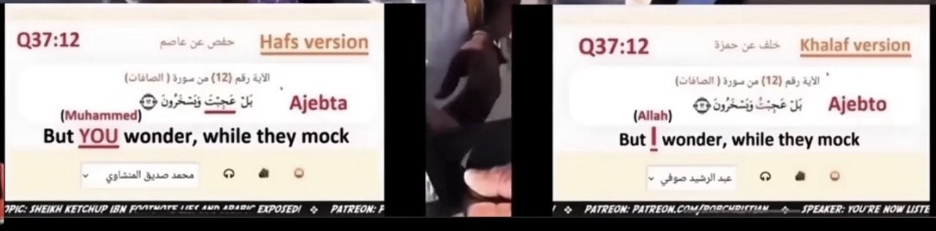
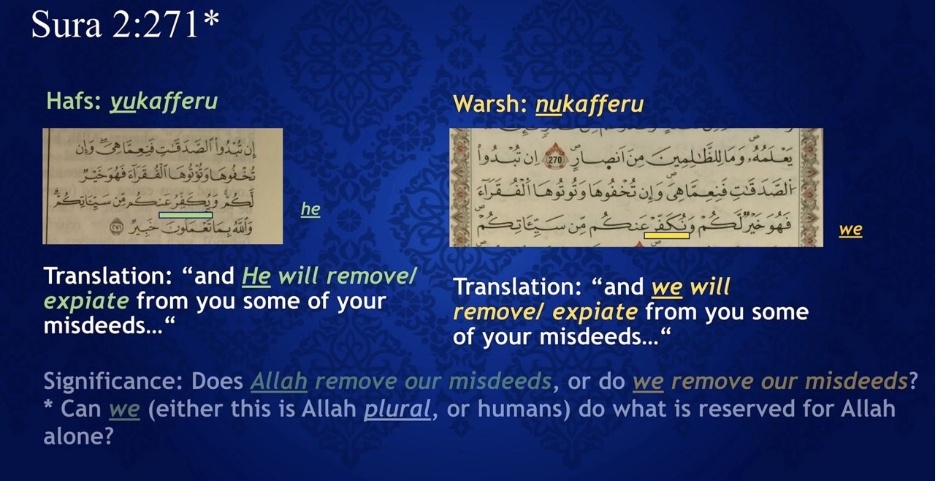
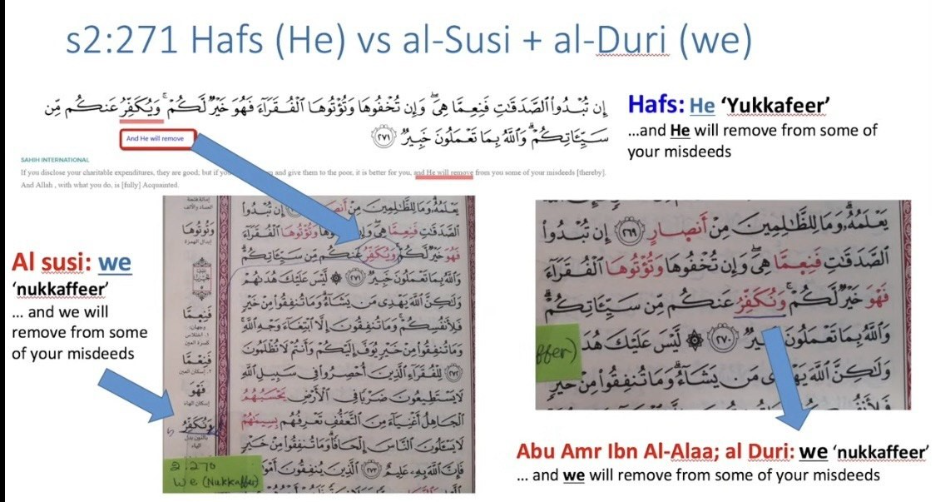
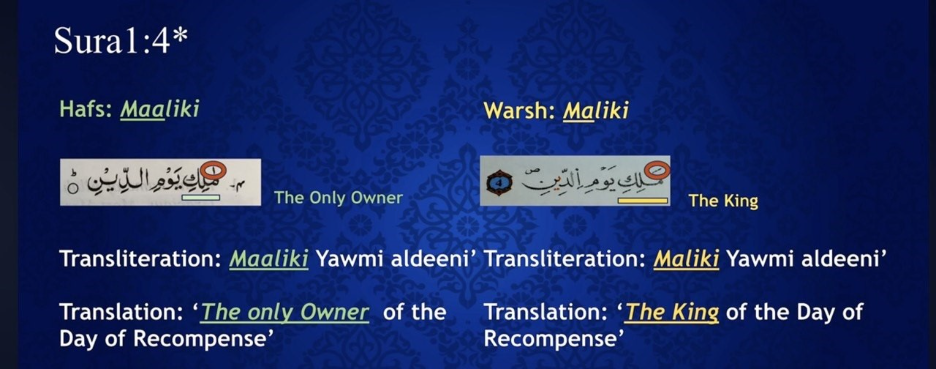
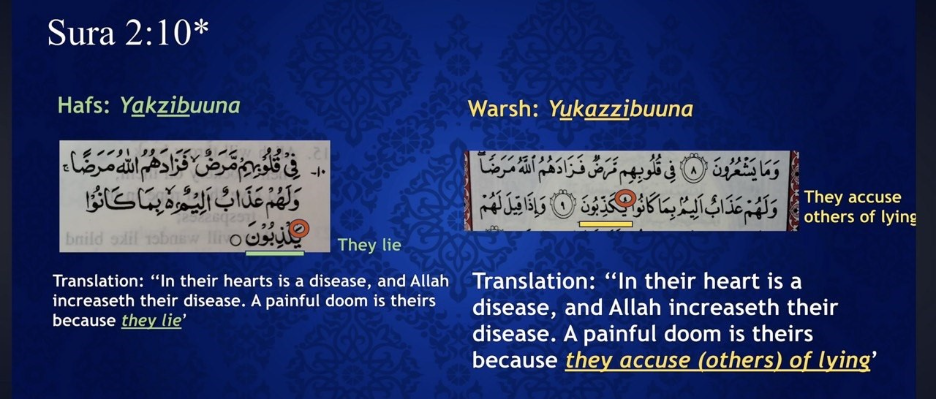
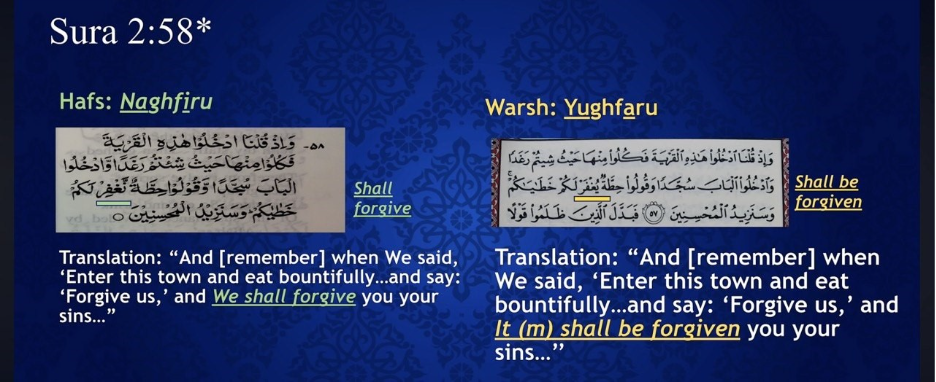
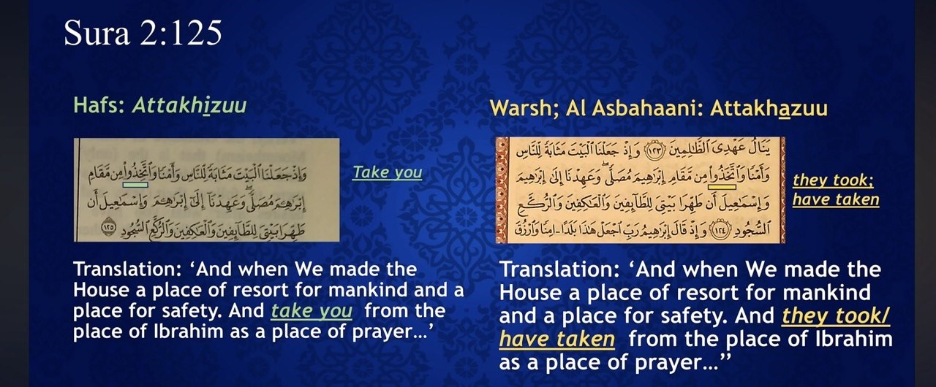
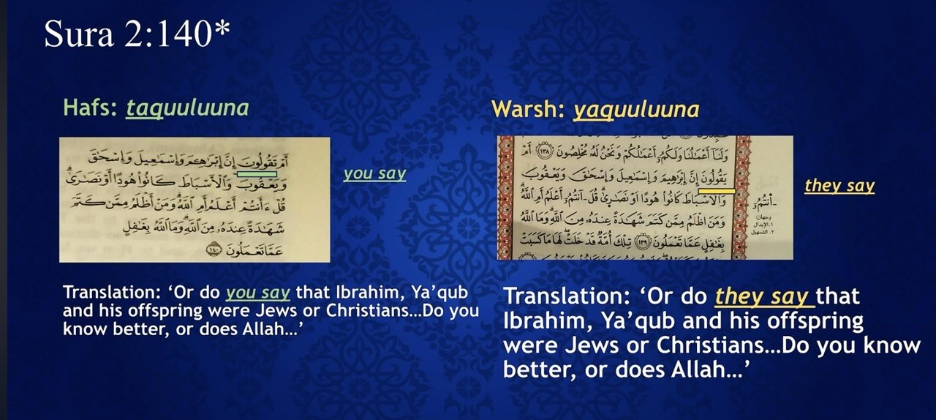
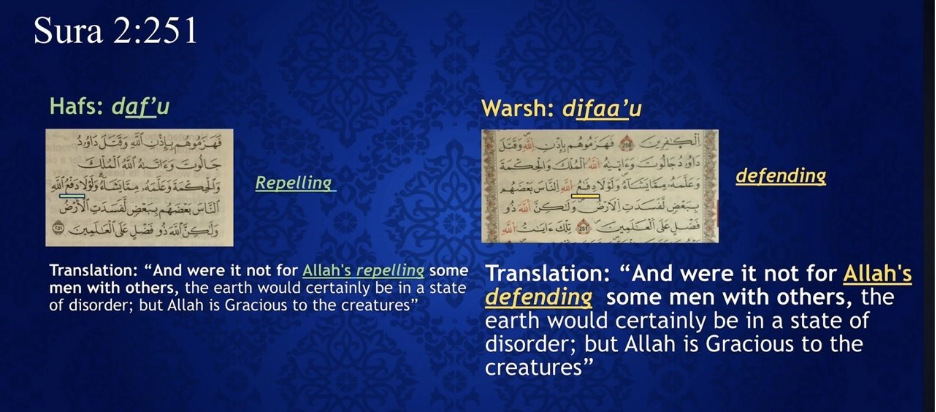
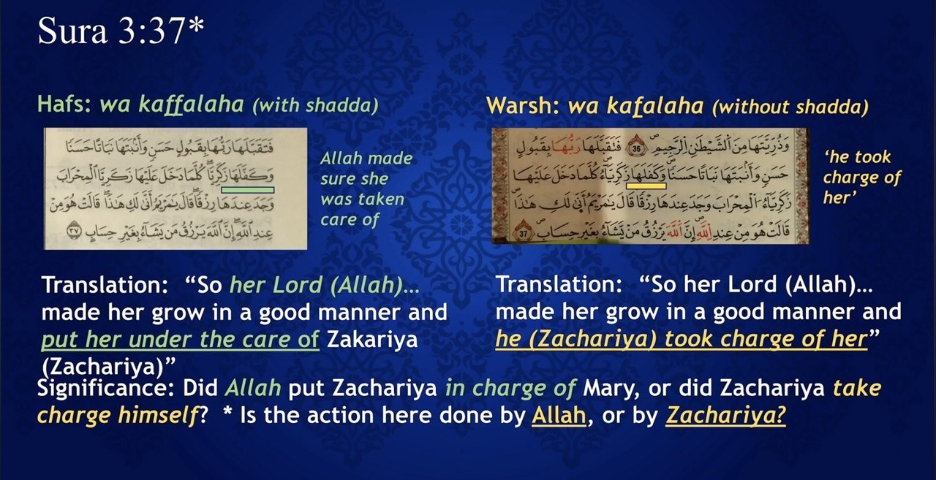
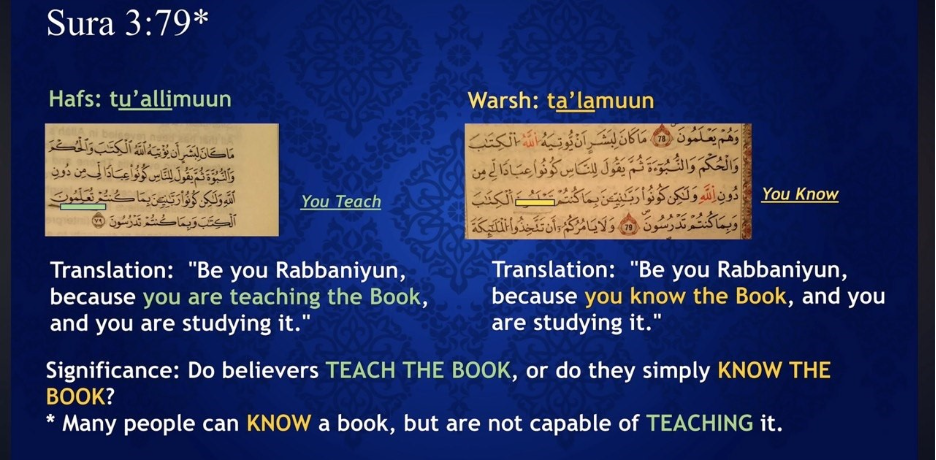
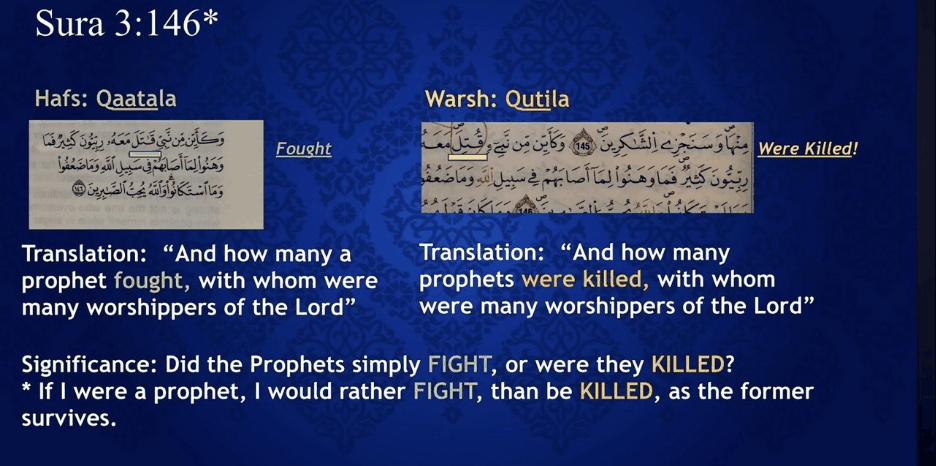
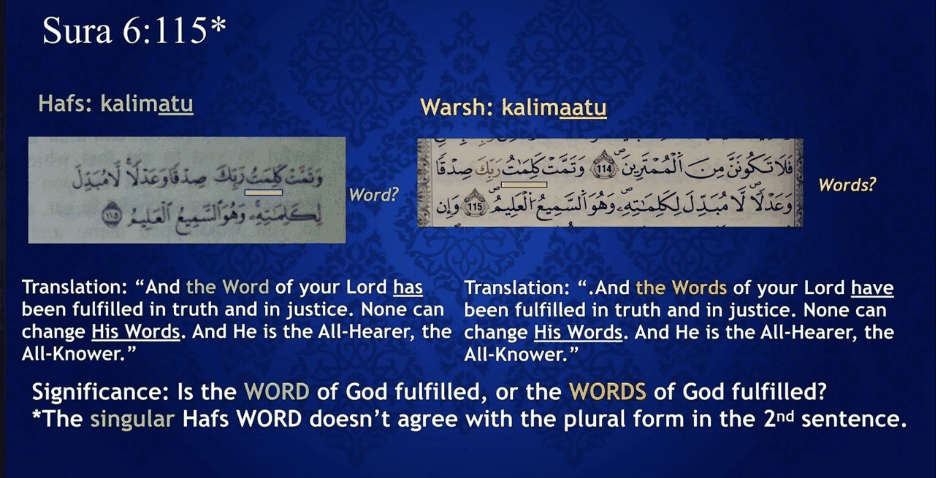
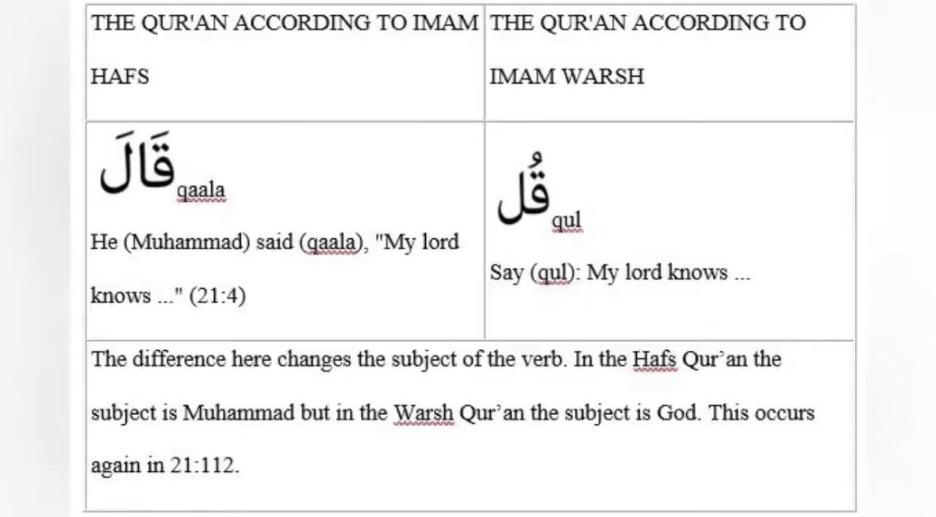
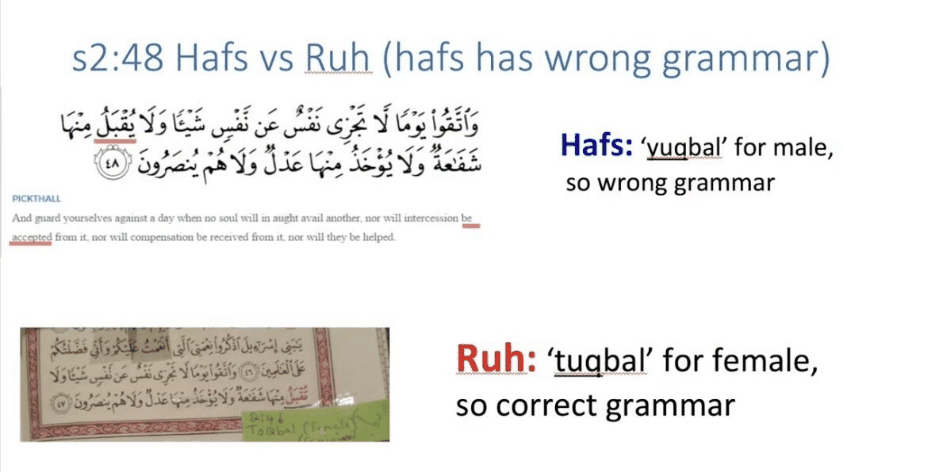
In another blog, we would talk about the manuscript evidence, are the available Quranic manuscripts exactly the same?
Frequently Asked Questions
Do Muslims believe the Quran has been preserved letter for letter since Muhammad?
Many Muslims believe the Quran has been preserved word for word, dot for dot, since the time of Muhammad, based on Surah 15:9's promise that Allah would preserve "the Reminder." The Hadith literature itself, however, records companions' codices that differed from each other, verses described as lost, and manuscripts that were deliberately burned under Caliph Uthman.
Why did Caliph Uthman order other copies of the Quran to be burned?
According to Sahih al-Bukhari 4987, Uthman ordered the burning after Hudhayfah ibn al-Yaman warned him that Muslims in different regions were reciting the Quran differently and could split into factions the way Jews and Christians had. Zaid ibn Thabit's codex was copied and distributed as the standard, and the other manuscripts — including those of companions like Ibn Mas'ud and Ubayy ibn Ka'b, which contained real textual differences, not just pronunciation — were destroyed.
What is the difference between the seven ahruf and the qira'at?
The seven ahruf were modes of recitation said to date back to Muhammad's own lifetime (Sahih al-Bukhari 4992). The qira'at (readings) are a separate, later phenomenon arising from the ambiguity of the early consonantal Arabic script, which lacked vowel marks and dots. In 322 AH, the scholar Ibn Mujahid narrowed the many circulating qira'at down to seven canonical readings; three more were added later, bringing the Sunni total to ten.
Why do almost all Muslims today read the same version of the Quran if there are 10 canonical qira'at?
The Hafs 'an 'Asim reading became dominant largely through two 20th-century developments: Egypt's 1924 Cairo Edition, produced under Al-Azhar's supervision, and the King Fahd Complex for the Printing of the Holy Qur'an in Medina, which began mass-distributing free copies from 1985 onward. Both 'Asim and Hafs were born decades after Muhammad's death and were not his companions.